
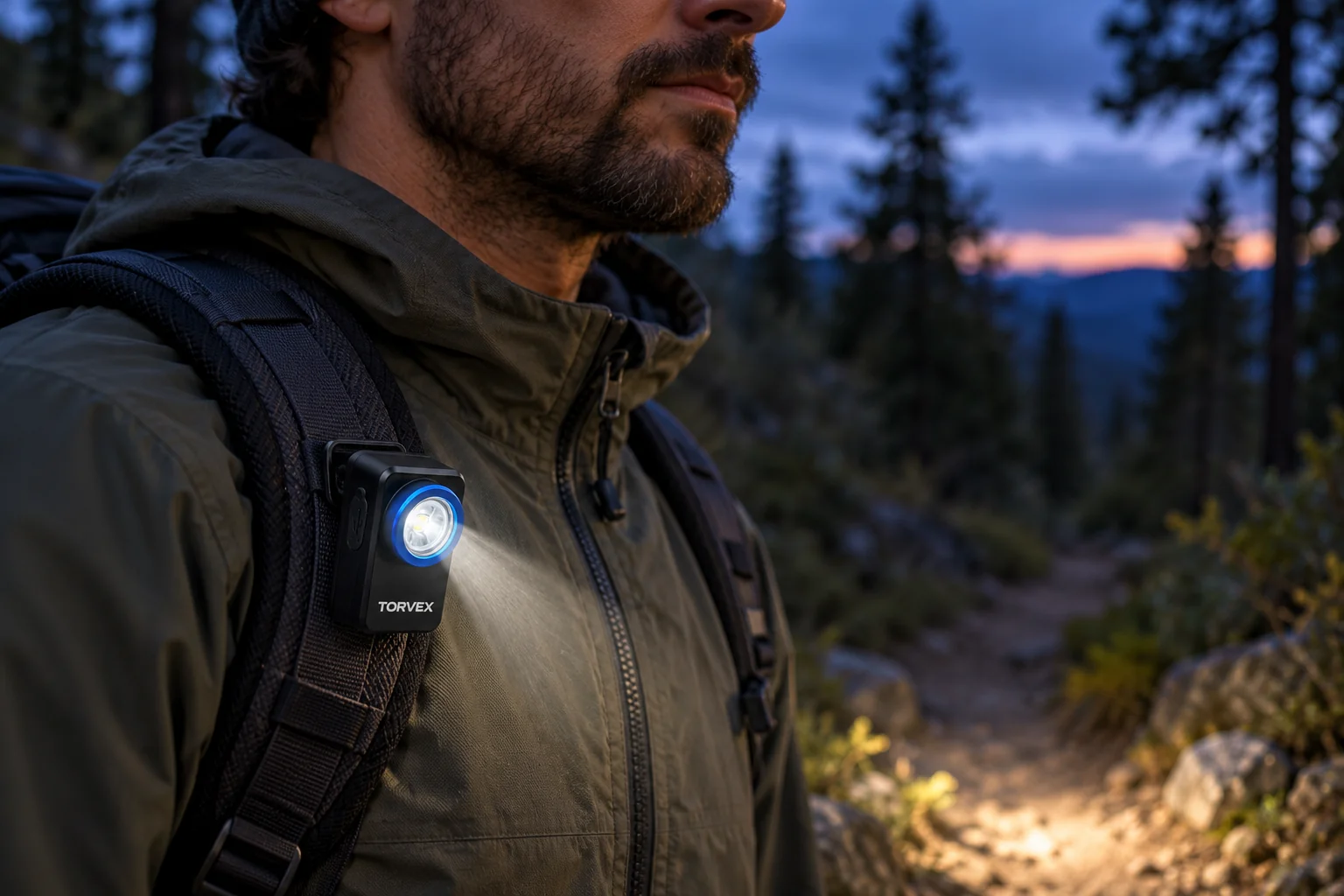
A pocket light needs to do more than fit inside a pocket. It should be easy to carry, quick to operate and practical to position when the user needs both hands.
For distributors and private-label buyers, this makes product selection more detailed than simply comparing maximum lumens or battery capacity.
Start with the intended task, then evaluate how the light works as a complete product.
1. Define What “Pocket Light” Means for Your Customers
Pocket lights come in different shapes and serve different purposes. Some provide a focused forward beam. Others spread light across a nearby surface or combine several lighting functions.
Before requesting quotations, describe the intended use:
- A compact light carried throughout the day.
- A supplementary light for inspecting equipment.
- A clip-mounted light for hands-free tasks.
- A small light for camping and everyday outdoor activities.
These needs may overlap, but they do not necessarily lead to the same product.
A useful purchasing brief identifies the main task first and treats additional functions as supporting features.
2. Compare Beam Pattern Before Maximum Brightness
Consider what the user needs to illuminate and at what distance.
A focused beam may suit checking a particular object or looking farther ahead. Broader illumination may be more comfortable when working on nearby equipment or organizing small items.
When evaluating samples, check the light at the intended working distance. Look for useful coverage, distracting reflections and shadows created by the mounting position.
If the product has several brightness levels, test all of them. The highest setting may attract attention, while a lower setting may be more suitable for the customer’s everyday task.
For a deeper explanation, read our guide to lumens and beam distance.
3. Treat the Clip and Magnet as Functional Components
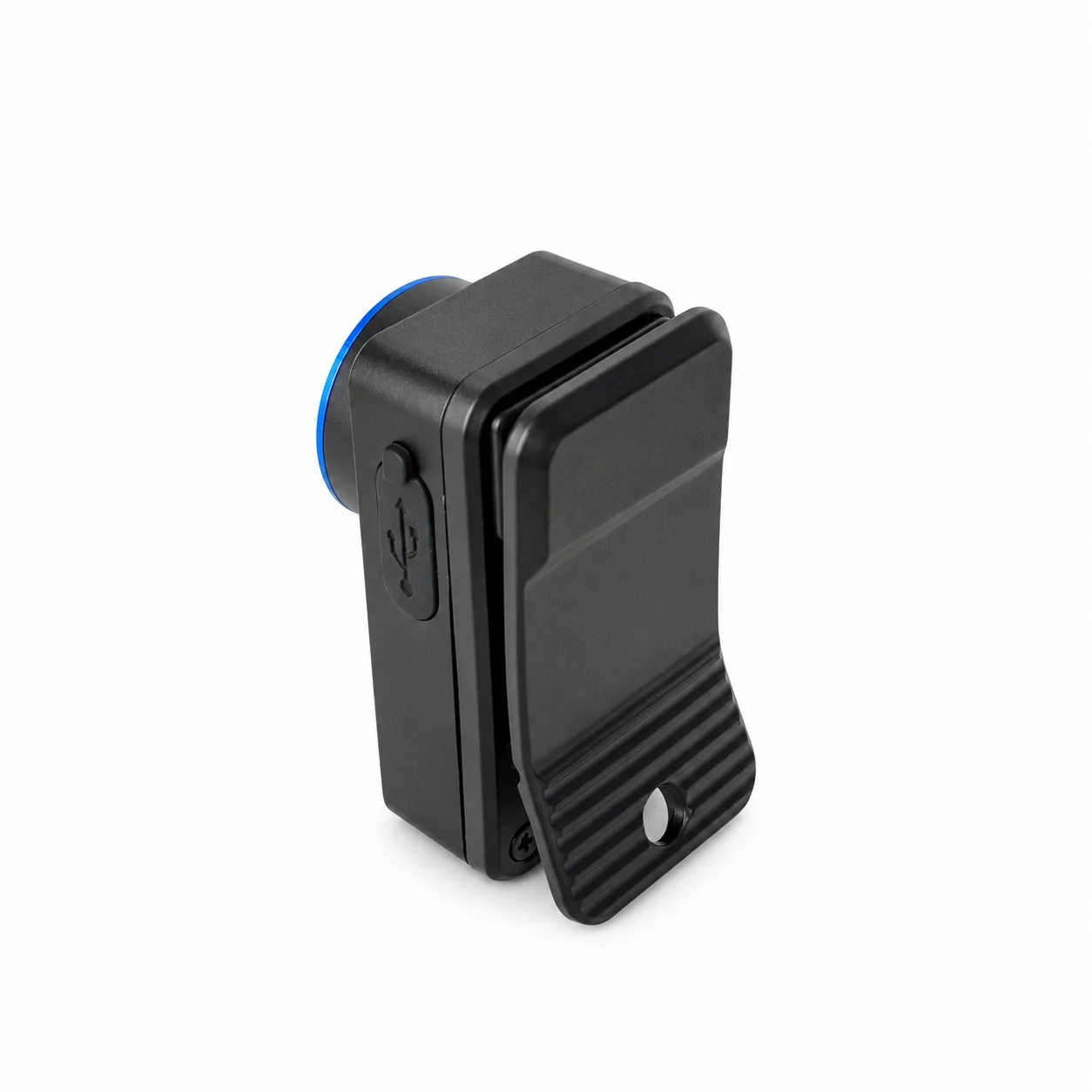
A clip or magnet can be an important reason to choose a pocket light. These features deserve the same attention as the LED and battery.
| Feature | What buyers should check |
|---|---|
| Pocket clip | Grip, ease of attachment and whether it catches on clothing |
| Clip opening | Compatibility with the intended pocket, strap or attachment point |
| Magnetic attachment | Holding ability on the actual surface and in the intended orientation |
| Adjustable positioning | Whether the light can be aimed at the task and stays in place |
| Contact surfaces | Whether attachment or removal leaves marks on the intended surface |
A magnet does not attach to every metal surface. Check it on the materials customers are likely to encounter.
Paint, surface shape and the direction of loading can also affect how securely the light stays in place. Test the complete product rather than relying only on the presence of a magnet in the specification list.
Do not describe a pocket clip as suitable for safety-critical attachment unless that use has been specifically assessed.
4. Check Pocketability with a Physical Sample
Dimensions and weight are useful starting points, but they do not fully describe carrying comfort.
Handle the sample and carry it in the type of pocket or bag used by the target customer. Check:
- Whether edges or protruding parts press uncomfortably.
- Whether the clip adds noticeable bulk.
- Whether the switch can activate accidentally.
- Whether the charging-port cover stays closed.
- Whether the light is easy to retrieve and put away.
Confirm whether the stated weight includes the battery. For compact products, inconsistent weight definitions can make comparisons misleading.
5. Connect Runtime to a Specific Mode
A single runtime figure leaves important questions unanswered.
Ask which lighting mode was tested, what battery was used and how the end of the test was defined. Also request information about how brightness changes during operation.
Avoid presenting maximum brightness and longest runtime together in a way that suggests both are available simultaneously unless testing supports that claim.
Battery capacity should also be considered alongside voltage, operating power and usable output. Capacity alone does not establish how long two different lights will perform the same task.
For sample evaluation, record the selected mode and observe the output over a period representative of the intended use.
6. Look Beyond the Charging Connector
USB Type-C identifies the connector. Buyers should still confirm the charging input, compatible charging arrangements and supplied accessories.
For each shortlisted model, check:
- Rated charging voltage and current.
- Compatibility with the intended cable and power source.
- Charging time and the conditions used to determine it.
- Charging and full-charge indications.
- Whether a cable or power adapter is included.
Do not assume that a Type-C port means fast charging or that operation while charging is supported.
Test the charging arrangement that will actually be supplied or recommended to customers.
7. Evaluate Controls and Secondary Modes
Small lights can have several functions controlled by one button. Test whether the mode sequence remains easy to understand.
Can the user reach the desired brightness quickly? Can the light be switched off without cycling through unwanted modes? Is the button easy to locate by touch?
Where red light or flashing modes are provided, check how they are accessed and whether accidental activation is likely.
Describe these functions accurately. A red flashing mode should not be presented as a certified safety signal unless supporting documentation establishes that suitability.
8. Confirm Durability Claims and Sales Materials
Before publishing protection or impact-resistance claims, ask for evidence that applies to the actual model and supplied configuration.
Keep wording consistent across the product page, packaging, instructions and quotation. Avoid replacing a specific protection rating with broader claims such as “fully waterproof” or “indestructible.”
For private-label projects, confirm the available logo area, packaging layout, included accessories and instruction requirements before approving artwork.
A compact product may have limited space for branding and operating information. Reviewing these details with the sample helps prevent last-minute changes.
Build a Clear Comparison Record
A simple evaluation sheet makes it easier to compare models and communicate decisions.
Record the intended task, beam pattern, mounting performance, carrying comfort, controls, charging arrangement and mode-specific runtime information.
Separate confirmed specifications from items still awaiting evidence. This gives purchasing and sales teams a shared reference for sample approval and product presentation.
Explore Rechargeable Pocket Lights with TORVEX
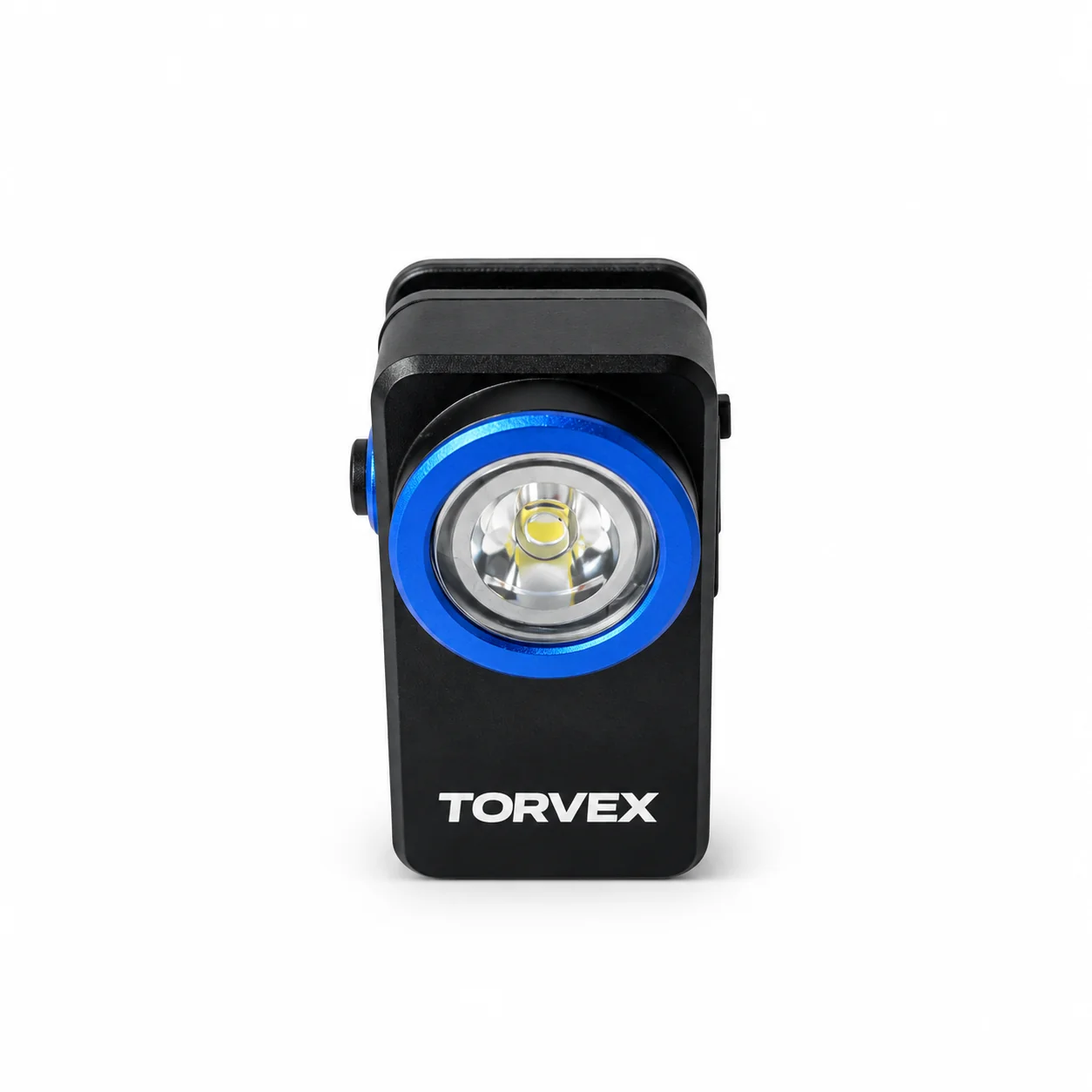
The TORVEX FL-5018 is one option to consider for a compact rechargeable lighting range, with USB Type-C charging, a magnetic clip and High, Low, Red Light and Red Strobe modes.
Evaluate these features against your customers’ intended tasks and confirm the latest specifications and supplied configuration when requesting samples.